Interestingly, this is the band's first time working with producer Jacob Hansen - a well-known face in metal both as a musician and as a producer. Whilst Hansen works with a broad range of metal bands, his work tends to have a sheen to it and he often works with more overtly melodic bands, so I would not imagine that he was responsible for this slight shift in tone. As would be expected from anything he has worked on, though, The Allfather Awakens sounds great - so even though there is a heaviness here there is also plenty of sonic clarity. One of the album's singles in Gjallarhorn kicks things off, and there is immediately a clear mix of melody and heaviness on show. A wordless vocal hook, backed by a guitar lead, kicks things off in a chanted manner, nicely setting the Norse tone that Amon Amarth often evoke, before a proper riff kicks in - and the band crash in, laying down a fairly mid-paced, tough groove as Hegg starts to growl properly. Whilst drummer Jocke Wallgren's double bass drumming is pretty fast here, the guitar riffing does not feel all that fast. As such, there is a strong mid-paced feel throughout - whilst a section between the chorus and later verses feel more juddering, with drum breaks and some more stop-start riffing. Despite the mid-paced feel, there are still some melodic guitar moments. Guitarists Olavi Mikkonen and Johan Söderberg throw in a few subtle harmonies - and there is a slightly heroic-sounding instrumental pre-chorus which focuses more on guitar leads. The song's chorus is one of the album's best, though, with some of the anthemic qualities that the band have become known for. The mid-paced, yet should-be-fast-feeling, groove continues, though, which perhaps makes it feel a little more venomous - even though Hegg's growls are easy on the ear at this point and can be shouted-along with. Eight Legs of Thunder opens with some melodic guitar leads, but this instrumental moment is short lived - as soon Hegg takes over, grunting in a darker manner over a much chunkier verse groove. This is a song that moves back and forth between heavier verses and a more melodic chorus. Hegg sounds more like his younger self as the headbanging death metal verses move along, with little in the form of melody, but once the chorus is approached some twin guitar leads kick in - and another fairly anthemic chorus takes over. Hegg is a bit less intense here, sounding more like his more recent self, whilst a guitar lead feels unusually high in the mix. There is a galloping feel to the chorus thanks to the drumming, too, which later carries on through quite a lengthy guitar solo segment - which is very traditional, old-school metal in its overall delivery. The mix of styles here makes the song a fun one, with the chorus and solo section in particular standing out. Kvasir's Blood pulls back on some of the pace of the opening couple of tracks, with a slab-like riff laid down from the off that sets a fairly sluggish, mid-paced groove. There is something quite hypnotic about the approach here, and the verses carry this on by seeing the guitars drop out - to leave Ted Lundström's bass rumbling alone behind Hegg's very deep growls and a single bass drum. Despite the guitars dropping away, there remains a heaviness due to Hegg's uncompromising vocal, which is essentially pure death metal in sound, and a sense of melody returns during a busier chorus - which sees sombre guitar join back in behind a more up-tempo vocal and drum pattern. The chorus is not as hooky as the previous two, but it feels hooky in and of itself due to the song's strange verses - with the song being a good example of the more diverse arrangements hinted at earlier.
We Rule the Waves immediately feels more upbeat, with a fairly jaunty guitar riff opening things up - whilst the band join in around it. Compared to the stranger vibes of the previous song, this one is very much a crowd-pleaser - similar to many of the songs on the band's recent albums. The verses have a strong, traditional heavy metal feel, with simple drumming that avoids double bass patterns and chunky riffing. There are subtle guitar harmonies thrown in here and there, but largely the band just riff away - over which Hegg does his thing. The traditional metal grooves give the song an old-school, pleasing energy, and it does allow for a contrast with a heavier chorus - that ups the pace with double bass drumming and more of a lead guitar approach. Despite the pace, though, the chorus remains hooky. Hegg's voice powers through the mix, whilst his delivery is very easy to latch onto. It is another chorus to nicely shout along to, and very in-keeping with Amon Amarth anthems of late. The album then takes a bit of a left turn with Upphaf, an acoustic-led, folk song of the kind I am not sure that Amon Amarth have done before - at least to this extent. I have not heard all of their albums, but I do not recall a song of this nature before - and I think that it largely works. I really like the acoustic guitar playing throughout. There is enough attack in the playing to allow for a metallic feeling, but there is also a subtlety in the approach - especially when some folky melodies are thrown in. Simple percussion sits in the background, whilst Hegg delivers the vocals in a semi-spoken manner. There are some moments where he largely sounds like his usual self, but he is mostly more restrained here - allowing a haunting spoken word to float above the interweaving acoustic guitars and simple percussion. The song is rustic in a way that Amon Amarth are generally not - and some of the folkiness of the band's typical guitar leads can be heard here in a more organic manner. Die with a War Cry gets back to something much more typical for the band, with a dark, creeping guitar riff opening the song up - before a somewhat doomy groove takes over. Creeping is a pretty good way to describe the song overall, I think. The previous song was understandably slow, and a slow vibe is also retained here. There is a headbanging groove to the verses, with aching guitar melodies occasionally breaking out, whilst the chorus is more overtly extreme metal with some of the throatiest vocals on the album. Things do speed up later on, and there is a quite intense section that actually harks back to the some of the black metal tinges the band exhibited in their early days - with vocals and guitar sounds of that nature. Much of the song is crunchy, doomy, death metal though, with less of a melodic sense and more of a relentless atmosphere. Raven God picks up the pace again, with some fast double bass drum patterns setting the tone early on - but the song is actually quite varied throughout, despite a pretty melodic overall approach. The guitar playing here is much hookier than it can often be, and there is another chorus that is up there with being one of the album's best. There is a folky sway to the chorus despite its heaviness, with Hegg utilising quite traditional phrasing - whilst melodic guitar leads flash away. Tight guitar hooks, percussive breaks that introduce some different riffs, and the tavern-filling chorus that will have everyone singing along makes the track an overall highlight - and, in many ways, one of simple pleasures.
The album's title track follows, and the band return to a darker, more mid-paced sound. This is another song with more of a traditional heavy metal groove throughout - with the verses not unlike a heavier version of something Judas Priest might have come up with during the 1980s. Lundström's bass, which does not generally stand out on an Amon Amarth album, feels a bit more prominent here - rumbling away in a more consistent manner under the guitar riffing as Hegg growls away. This is also the case during the chorus, which is more melodic and somewhat busier guitar-wise - but the overall crunch and mid-pace feel remains, allowing the bass to shine. The guitar leads are simple and melodic, again harking back to a much more traditional heavy metal sound. Amon Amarth have often done songs of this nature, and they generally work well - shining a light on their influences whilst still sounding like themselves. Clearly needing some more venomous after the mid-paced and melodic previous numbers, Oden's Hunt picks up the pace and goes for something much more relentless vibe-wise. The double bass drumming essentially never lets up here, although there are some somewhat more mid-paced breaks with a circular guitar melody, but mostly this song is hard and fast - with Hegg moving back and forth between a higher-pitched screamed approach and something more akin to his typical growl. The fast-picked guitar melodies during parts of the song hark back to those black metal influences again, albeit only tangentially, whilst elsewhere there are proper gang vocals - allowing for a genuine shout-along moment. The speed and the song's overall energy, alongside these gang vocal-led moments, are sure to allow the song to really come alive on stage - with a true death metal bridge section later on slowing the pace to allow for proper mid-song headbanging. The song was not one that stood out from the off, but it has become a bit of a favourite over my repeated listens to the album. Things then come to a close with Ascending Like an Eagle, the longest song here at just under seven minutes. Given the length here, there is a bit more room than usual for the band to stretch out. Whilst certainly no progressive metal epic, there is perhaps a bit more variety here - and certain sections are allowed a bit more room to breathe. For example, the intro feels like it gets a bit more time to develop, with the band layering in around a simple guitar motif - whilst elsewhere there are more contrasts between heavier sections and moments that are much more melodic. The chorus is one of those more melodic moments, and it is also longer than usual - allowing a couple of guitar hooks to sink in and Hegg's lyrics to shine. Despite the length, though, pace-wise the song largely stays the same - with double bass drums firing away in the background. There is still variety in the riffing and tone, though, with the pace just keeping everything moving - meaning that the song feels quicker than its longer length suggests. It works well as a closing cut due to this relentless energy and dynamic arrangement - bringing what is another strong album from the Swedish band to a close. Whilst Amon Amarth is generally one of those bands where each album tends to stick to a formula - they are worth keeping up with. I do like the look back to a somewhat heavier approach here, even if the band's trademark anthemic nature has been retained. The Allfather Awakens will not touch that personal sweet spot, but I have already got quite a lot out of it - and will likely get more out of it going forward.
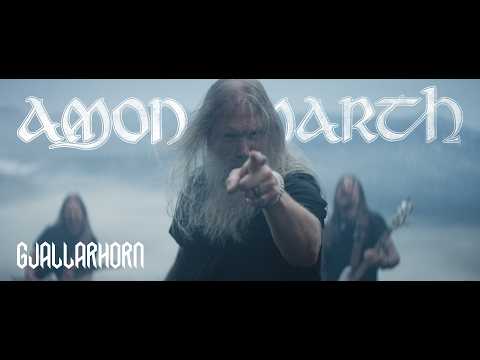
The album was released on 2nd October 2026 via Metal Blade Records. Below is the band's promotional video for Gjallarhorn.

No comments:
Post a Comment